Sub-Zero Wine Cooler Repair
Common Sub-Zero Wine Cooler Problems, Symptom by Symptom
The most common wine cooler problems are a cabinet running warmer than its setting, dual zones drifting together, frost or water at the back wall, new noise, and a dead display. Most start with a grille, room or door seal check an owner can do safely.
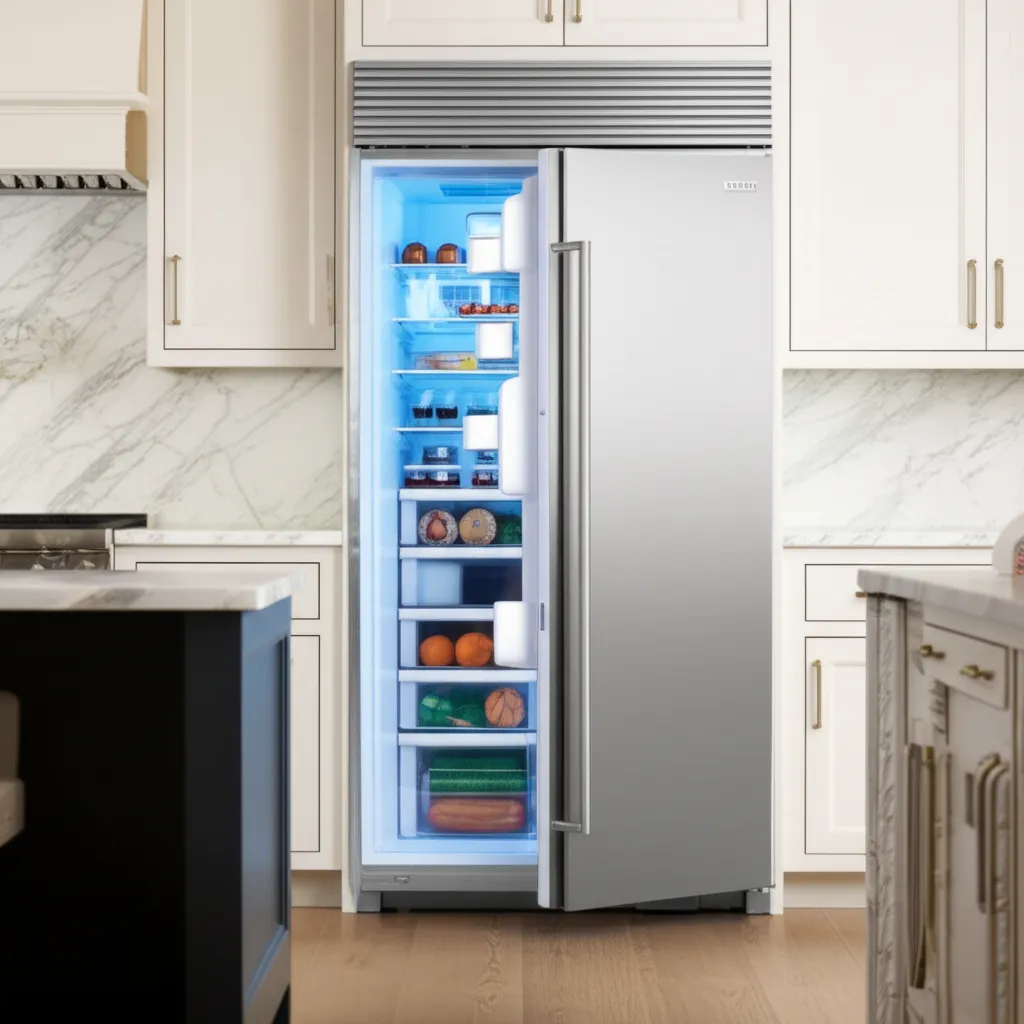
The most common problems with wine coolers show up in a fairly predictable order: the temperature drifts a few degrees above the setting, the two zones of a dual-zone cabinet creep toward each other, frost or water collects on the back wall, a new hum or rattle appears, and finally the display or interior light goes dark. Most of these start with something an owner can check in a quarter of an hour, such as a dusty grille, a warm room or a door gasket that has stopped sealing. For reference, long-term storage sits around 55°F, so a steady reading of 60°F on a cabinet set to 55 is a real fault, not a quirk.
That drift matters more than it would in a refrigerator. Wine units often live away from the kitchen, in a dining-room cabinet, a butler’s pantry or a finished basement, so a slow climb can run for weeks before anyone opens the door and feels a warm bottle. The sections below follow the symptoms in the order they usually appear, with the safe checks first and the point where a technician should take over.
The cabinet runs warmer than its setting
A warm cabinet is the complaint heard most often, and the cause is usually heat that cannot get out. Every wine unit pushes heat into the room through a grille, either at the toe kick of a built-in model or at the back of a freestanding one. If that grille is packed with dust or blocked by a rug, a basket or trim added during a renovation, the system runs longer and still loses ground.
Freestanding thermoelectric coolers have a limit of their own. They have no compressor; a solid-state module moves heat from inside to outside, and it can only pull the interior roughly 20 degrees below the surrounding air. In a sunny room or a basement corner next to the heating system, a thermoelectric unit may simply be unable to reach 55°F. That is a placement problem rather than a broken part, and moving the cooler often cures it. Compressor-based built-ins, including Sub-Zero’s integrated wine storage, cope with a warm room far better, so the same symptom on one of those points somewhere else.
Owner checks before anything else
- Confirm the setting has not been nudged, and read the temperature with a thermometer in a glass of water on a middle shelf rather than trusting the display.
- Unplug the unit and vacuum the grille and any visible condenser coil with a soft brush attachment.
- Shut a sheet of printer paper in the door at the top, the bottom and both sides; any spot where it pulls free without resistance marks a gap in the seal.
- Make sure no bottle or shelf is holding the door slightly open, and that the cabinet is level so the door swings shut on its own.
- After any change, wait a full 24 hours before judging the result. A loaded wine cabinet recovers slowly because the bottles themselves hold so much warmth or cold.
Two zones that will not stay apart
Dual-zone cabinets keep reds and whites at different temperatures, and the usual failure is that the gap closes: the cold zone warms up, or the warmer zone gets colder than it should. Before blaming the hardware, check that bottles are not pressed against the divider or the rear wall, where they block the air each zone depends on. Packing the upper zone with large-format bottles has the same effect.
If the airflow is clear and the zones still drift together, the likely culprits are a temperature sensor that has started reading wrong, a fan that has slowed, or the control that divides cooling between the two compartments. Those parts sit behind interior panels and need a meter to test, which is the kind of diagnosis described on our wine cooler repair service page.
Frost on the back wall or water under the shelves
A thin, even film of frost that comes and goes is normal on some models; a thick sheet that keeps growing is not. Heavy frost usually means warm, damp air is getting in past a tired gasket, or the unit is failing to defrost because a heater, a sensor or a defrost thermostat has quit. Water pooling in the bottom of the cabinet, or dripping onto the floor, more often points to a drain line that has clogged with debris or frozen solid.
You can safely unplug the unit, move the bottles somewhere cool, and let the ice melt on its own with the door open and a towel underneath. Never chip at frost with a knife or a screwdriver; one slip can puncture the evaporator and turn a modest repair into a sealed-system job. If the frost returns within a week or two, the defrost circuit needs testing.
New noise, vibration or a compressor that never rests
A soft hum and the click of a compressor starting are ordinary sounds. Rattling, grinding, ticking or a whine that rises and falls usually comes from an evaporator or condenser fan with a worn bearing, or a blade catching on ice. Vibration deserves attention in a wine unit, because constant shaking can stir sediment in older bottles, and a cabinet in a quiet dining room makes every sound obvious.
A compressor that runs almost nonstop while the temperature still climbs is a different warning. Clean the grille first, since that costs nothing, but if the run time stays long, the fault may be a fan, a low refrigerant charge or a compressor losing strength.
A blank display, dead lights or no power at all
If the display is dark, test the outlet with a lamp, then check the breaker and any GFCI outlet that may have tripped, which is common on basement circuits. A unit that has power at the outlet but shows nothing, flashes an error, or ignores its buttons usually has a control board or user-interface fault. Write down any code exactly as it appears, because it shortens the diagnosis.
When to stop checking, and what repairs typically run
Stop the home checks if you smell burning or a sharp chemical odor, see oily residue near the tubing, hear the compressor click on and off every few minutes, or find that the next step means removing a panel. Those are jobs for a technician with refrigerant tools and wiring diagrams, and replacement parts should be factory-approved.
Here is what the repairs behind these symptoms typically cost, with the firm figure given once the fault is found:
- New door gasket: typically $270–$810
- Fan motor, evaporator or condenser side: $310–$600
- Sensor, defrost heater or defrost thermostat: $300–$690
- Control board: $480–$860
- Sealed-system or compressor work: $1,000–$2,190
A visit begins with a flat $95 that pays for the trip and the complete diagnosis, and that amount comes off the repair if you choose to proceed. Homeowners in Weston, Newton, Arlington and Cambridge can reach us at (781) 456-3468, and the wine cabinet overview explains how built-in wine storage differs from a standard refrigerator.
Still asked on the phone
Why is my wine cooler warmer than the temperature I set?
Usually because the cabinet cannot get rid of its heat: a dusty or blocked grille, a warm room, a gasket that no longer seals, or a door opened too often. Thermoelectric coolers also hit a ceiling in a warm room, since they can only pull the inside about 20 degrees below the surrounding air. Clean the grille, test the seal, then give the unit a full day to settle before judging it.
Is it normal for a wine cooler to make noise?
A low hum and the click of the compressor starting are normal; rattling, grinding, ticking or a rising whine are not. Those sounds usually come from a fan with a worn bearing or a blade touching ice, and in a wine unit the vibration is worth fixing because steady shaking can disturb the sediment in older bottles.
Can I fix a wine cooler that stopped cooling on my own?
You can safely check the outlet, the breaker, the setting, the grille and the door seal, and those checks settle a fair share of cases. Anything behind an interior panel, such as a fan motor, a sensor, the control board or the sealed refrigerant system, needs a technician with proper meters and refrigerant tools.
What does a wine cooler repair usually cost?
It depends on the part, and as typical bands a door gasket runs $270–$810, a fan motor $310–$600, a sensor or defrost part $300–$690 and a control board $480–$860. The firm price comes after diagnosis, and the $95 visit fee is deducted from the repair if you decide to go ahead.